
Top US trade officials arrive in India for talks focused on tariffs, market access, and finalising a crucial Bilateral Trade Agreement.
A high-level US delegation, led by Deputy US Trade Representative Rick Switzer, arrives in New Delhi today for crucial bilateral trade negotiations. These two-day talks, scheduled for December 10 and 11, mark a significant effort to stabilize and advance the economic partnership between India and the United States. Officials on both sides remain cautiously optimistic about concluding the first phase of a proposed Bilateral Trade Agreement (BTA) before the year ends. The visit signals a renewed commitment to dialogue, especially following recent strains on the relationship due to increased US tariffs on Indian goods. Consequently, the outcomes of these bilateral trade negotiations will hold immense importance for exporters and policymakers alike.
Addressing the Tariff Headwinds
The most pressing item on the agenda involves the steep US tariffs currently imposed on Indian products. Washington levied a 25% reciprocal tariff earlier this year to address the trade imbalance, followed by an additional 25% tariff citing India’s continued purchase of Russian crude oil. These 50% duties have significantly impacted Indian exports, especially in labour-intensive sectors like garments and marine products, causing merchandise exports to the US to decline.
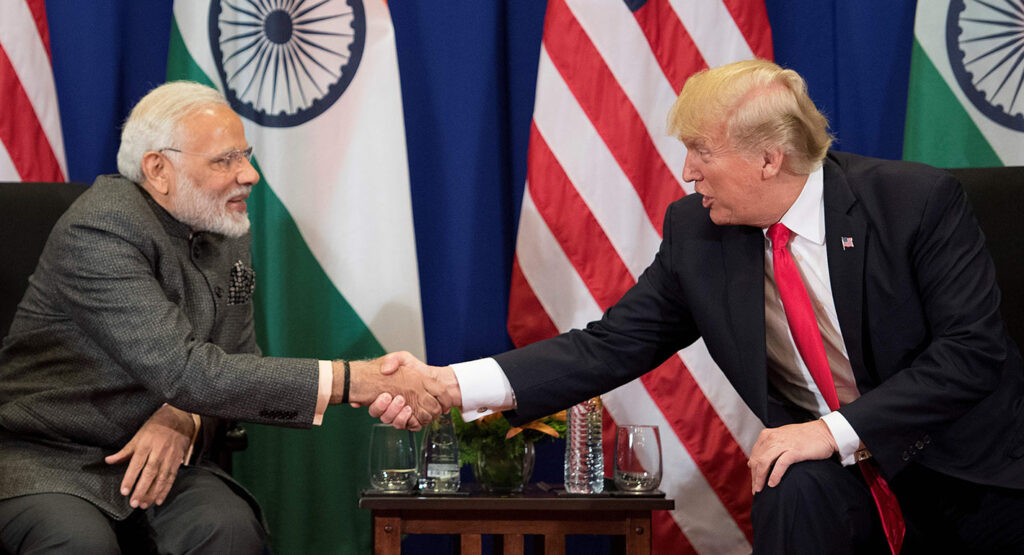
India’s negotiating team, led by Commerce Secretary Rajesh Agarwal, is keen to secure a rollback of these tariffs. Conversely, the US team is likely prioritising greater market access for its agricultural and high-tech goods. Successful bilateral trade negotiations on this tariff issue are essential for restoring business confidence and encouraging stalled supply chain investments.
The Path to a $500 Billion Trade Target
Beyond the immediate tariff concerns, the larger goal remains the finalisation of a comprehensive Bilateral Trade Agreement. Announced during Prime Minister Narendra Modi’s Washington visit, the BTA aims to nearly triple the current annual bilateral trade from approximately $191 billion to a target of $500 billion by 2030.
The discussions will cover complex subjects, including non-tariff barriers, intellectual property rights, and digital trade rules. Officials have held six rounds of talks so far, with a focus on an initial framework deal to resolve the tariff imbroglio acting as a precursor to the wider BTA. Therefore, this round of bilateral trade negotiations must secure tangible progress toward that long-term vision. Both nations understand a robust economic partnership is fundamental to their strategic interests in the Indo-Pacific.
The Hinge Point
The crucial unstated context of these talks is India’s evolving strategic autonomy, particularly its energy and defence ties with Russia. The imposition of the additional 25% tariff directly linked to Russian oil imports represents a significant pressure point from the US. However, recent data reveals India has strategically increased crude imports from the US, while Russia’s share has slightly declined. This shift, coupled with an Indian public sector deal for American liquefied petroleum gas (LPG) imports, provides a key opening. It gives the US administration political cover to potentially roll back the penal tariff without appearing to compromise on its foreign policy stance.
The underlying pressure on the Indian rupee, which has seen depreciation partly due to uncertainty over the trade deal, adds urgency for New Delhi. Analysts suggest that the discussions focus less on finalising the entire BTA right now and more on a “tariff-resolution package” to unlock capital flows and provide immediate relief to Indian exporters. The success of these bilateral trade negotiations ultimately hinges on the US acknowledging India’s strategic imperatives while India continues its slow, market-driven diversification away from Russian energy.