
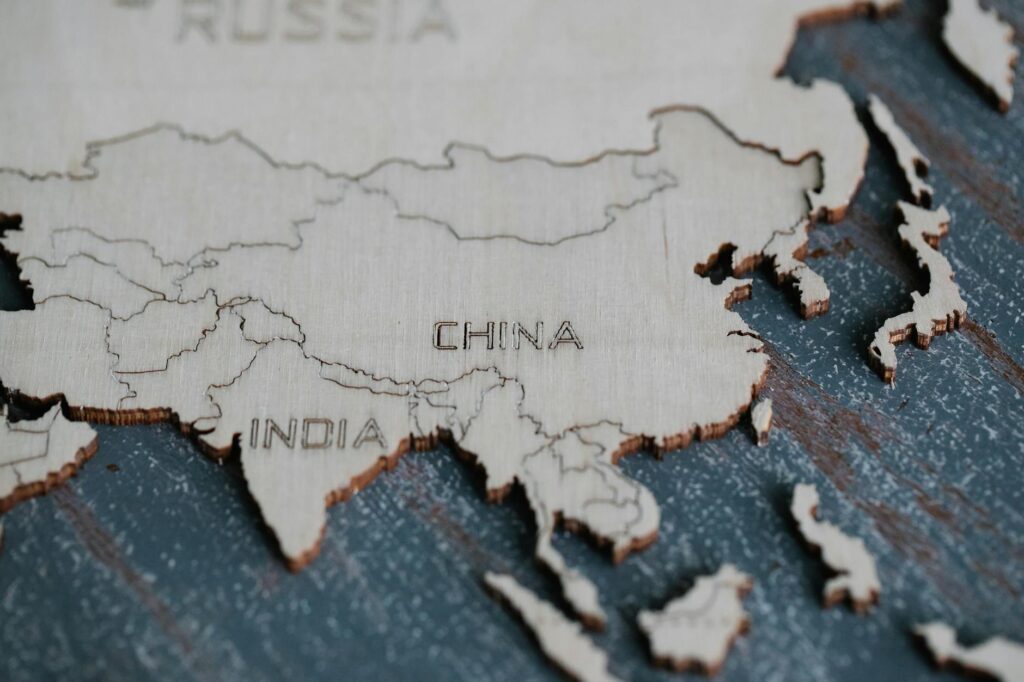
The Foreign Ministry dismisses American allegations as political slander but signals a distinct desire to stabilise ties with New Delhi
Beijing issued a sharp rebuke against Washington today regarding counter-terrorism. The Foreign Ministry dismissed the latest US State Department country reports on terrorism as “political slander.” However, the briefing took a notable, constructive turn regarding New Delhi. Foreign Ministry spokesperson Mao Ning explicitly stated that China is ready to enhance trust with India.
This dual messaging highlights a strategic pivot. China aggressively counters American narratives while simultaneously attempting to repair regional fractures. Consequently, the focus shifts to how Beijing manages its periphery amidst growing pressure from the West.
Rejection of US Allegations
The US State Department’s annual report often criticises nations for lack of transparency or cooperation in fighting terrorism. Mao Ning addressed these accusations directly during her press conference. She labelled the report as unsubstantiated and driven by ideological bias. Furthermore, she argued that the United States uses these reports to interfere in the internal affairs of other sovereign nations.
Beijing consistently maintains that its security measures are domestic matters. Therefore, any external critique is viewed as a violation of sovereignty. Mao asserted that China opposes all forms of terrorism. She also emphasised that the US lacks the moral standing to judge other nations’ counter-terrorism efforts. This response aligns with China’s standard diplomatic defence against American institutional criticism.
Stabilising the Neighbourhood
While the tone towards Washington was combative, the rhetoric regarding China India relations appeared significantly softer. Mao responded to queries about the current state of bilateral ties. She referenced the recent agreement on border patrols reached in October. This agreement ended a four-year military standoff along the Line of Actual Control.
Mao noted that both militaries are implementing the resolutions smoothly. Moreover, she expressed Beijing’s readiness to work with New Delhi to further improve China India relations. This signals a desire to move beyond crisis management toward a stable, albeit cautious, normalisation. The leadership in Beijing seemingly prioritises a calm western border to focus resources elsewhere.
Also Read: High-Stakes US Delegation Lands in New Delhi for Critical Bilateral Trade Negotiations
The Pakistan Disconnect
The briefing turned complex when reporters raised questions about Pakistan. The US report frequently highlights Pakistan’s role in harbouring terrorist elements. Historically, China defends its “iron brother” against such international censure. However, the spokesperson remained evasive regarding specific allegations against Islamabad in the US report.
Instead of a detailed defence, Mao reiterated general principles of cooperation. This evasion suggests a nuanced approach. Beijing wants to support Pakistan without absorbing the reputational cost of its ally’s security failures. Consequently, China separates its strategic partnership with Islamabad from the global counter-terrorism discourse dominated by the West.
Geopolitical Implications
This diplomatic maneuver reflects a broader strategy. Beijing is compartmentalising its foreign policy challenges. The aggressive stance against the US contrasts with the conciliatory approach toward China India relations. Stabilising ties with India reduces the risk of a two-front diplomatic conflict.
Furthermore, India acts as a significant variable in the Indo-Pacific strategy of the United States. By improving China India relations, Beijing attempts to limit Washington’s ability to leverage New Delhi against it. Therefore, the commentary on trust is a calculated geopolitical move rather than a mere pleasantry.
The Hinge Point
The story changes here because China is actively decoupling its India strategy from its US antagonism. Previously, Beijing often treated the Quad and Indo-US ties as a singular containment block. Now, the leadership distinguishes between the two. They treat the US as a systemic rival while treating India as a manageable neighbour.
This separation marks the end of the “wolf warrior” approach regarding the Himalayas. Beijing accepts that it cannot afford a volatile border with India while facing a trade and technology war with the United States. The evasion on Pakistan further proves this pragmatism. China prioritises its own stability over blind allegiance to allies. The era of unconditional diplomatic cover is ending. Future China India relations will rely on this new, pragmatic calculus rather than historical grievances.