
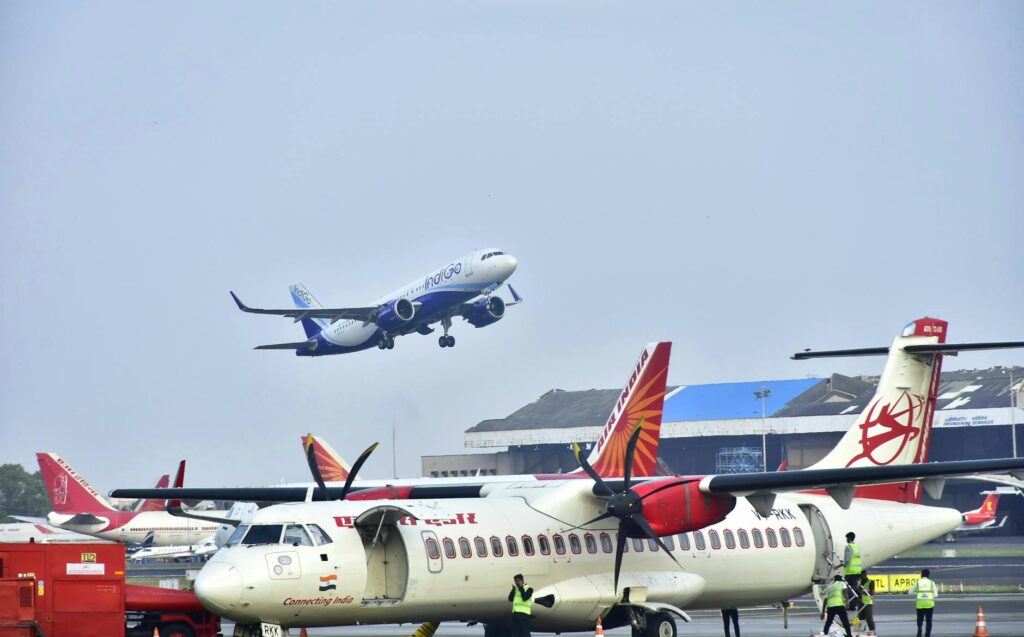
Following widespread disruptions by market leaders, the Civil Aviation Ministry clears two new carriers to decentralise India’s fragile aviation network
The Civil Aviation Ministry has formally granted No Objection Certificates (NOCs) to two new airlines, Al Hind Air and FlyExpress, clearing the path for their operational launch in 2025. This regulatory green light was expedited following a week of chaos in the Indian skies, where dominant carriers faced severe operational headwinds. The entry of these new players is not just a routine expansion but a tactical government response to the risks of a consolidated market.
Civil Aviation Minister K Rammohan Naidu confirmed the approvals after meeting with the leadership teams of the aspiring carriers. While Shankh Air had already secured its clearance earlier, the addition of Al Hind Air and FlyExpress signals a renewed push to diversify the sector. The government is keen to demonstrate that the Indian aviation market, projected to be one of the world’s fastest-growing, remains open to competition despite the intimidating dominance of incumbents.
The Background of the New Entrants
Al Hind Air is backed by the Kerala-based Alhind Group, a powerhouse in the travel and tourism industry with an annual turnover exceeding ₹20,000 crore. Unlike typical aviation startups that burn cash to acquire customers, Al Hind already controls a massive ticketing and agency network. They plan to operate ATR-72 turboprop aircraft, focusing initially on connecting South Indian tier-2 cities to major hubs like Kochi.
FlyExpress, while having a lower profile, enters the fray at a critical juncture. Along with Shankh Air, these carriers are looking to tap into the Regional Connectivity Scheme (UDAN). Their business models likely pivot away from the saturated metro-to-metro routes, targeting instead the underserved pockets of India where demand is rising but capacity remains stagnant.
Timing: The Crisis as a Catalyst
The timing of these approvals is inextricably linked to the recent “IndiGo crisis.” Earlier in December, India’s largest airline saw mass cancellations due to crew management issues and new flight duty norms. This meltdown exposed the fragility of a system where two groups—IndiGo and the Tata-owned Air India group—control over 90 percent of the market.
Also Read: Behind the IndiGo Meltdown: How Crew Rostering collapsed
The government realised that a duopoly acts as a single point of failure for the national transport grid. By fast-tracking Al Hind Air and FlyExpress, policymakers are attempting to create “capacity buffers.” If one major giant stumbles, smaller regional players can keep essential non-metro lifelines open, preventing a total network paralysis.
Systemic Implications
The launch of Al Hind Air and FlyExpress tests the viability of the “regional-first” strategy. Historically, regional airlines in India—like Air Costa, TruJet, and FlyBig—have struggled to survive due to high operating costs and thin margins. However, the current ecosystem offers a different landscape. The UDAN scheme provides viability gap funding, and the sheer volume of passenger traffic has exploded.
Furthermore, these new airlines are entering a market where the “vertical integration” model is being tested. Al Hind’s model of a travel agent starting an airline is unique in India. It suggests a shift where the entity selling the ticket also flies the plane, potentially securing higher margins by cutting out distribution costs.
The Hinge Point
The story changes here because the definition of a “viable airline” in India is shifting from scale to niche. For the last decade, the industry logic was that only massive scale (like IndiGo) could survive the brutal cost structures of Indian aviation. The approval of Al Hind Air and FlyExpress challenges this orthodoxy.
We are witnessing a pivot toward “captive demand” models. Al Hind Air does not need to fight IndiGo for a generic passenger on a Delhi-Mumbai run; it only needs to service the thousands of passengers its parent company is already booking for holidays and pilgrimages. This structural change means the new wave of airlines isn’t trying to be the next national giant; they are building defensible, regional fortresses. The market is moving from a winner-takes-all battleground to a fragmented ecosystem of specialized service providers, making the grid more resilient to the failure of any single large player.