
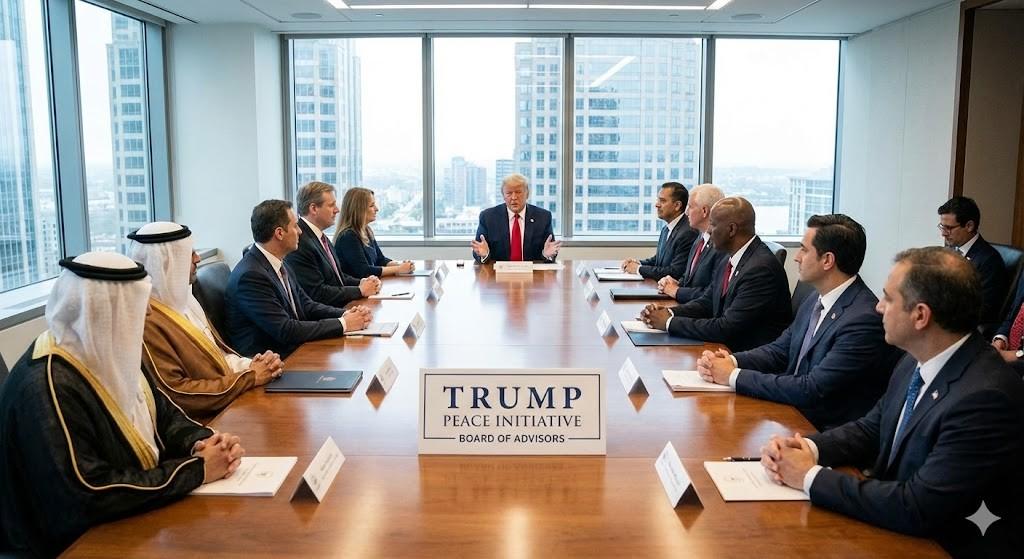
The US President has formally inaugurated a new international governing body at the World Economic Forum, proposing a radical shift in how global conflicts and reconstruction are managed
US President Donald Trump has officially signed the founding charter of the Board of Peace during a high-profile ceremony at the World Economic Forum in Davos. Flanked by leaders from nearly 20 nations, Trump framed the organisation as a modern, efficient alternative to existing international institutions. The body is ostensibly designed to oversee the reconstruction of Gaza, but its charter reveals much broader ambitions for managing global security and territorial disputes.
This launch represents the most significant challenge to the United Nations-led order in decades. By establishing a parallel structure with himself as chairman, Trump is attempting to centralise international mediation power within a US-centric, transactional framework. The timing is particularly notable as it coincides with a fragile ceasefire in the Middle East and ongoing tensions over Arctic sovereignty, positioning the new organisation as the primary arbiter for the world’s most intractable problems.
A transactional model for global governance
The Board of Peace introduces a revolutionary and controversial membership structure that treats international diplomacy like a corporate boardroom. According to the ratified charter, countries can secure a permanent seat on the board by contributing a one billion dollar “membership fee.” Those who do not pay are relegated to three-year rotating terms, with renewals subject to the approval of the chairman. This model explicitly links geopolitical influence to financial contribution, a move that has stunned traditional diplomats.
Also Read: America Is Still Powerful. Its Commitments Are No Longer Assumed
While dozens of countries from the Middle East, Central Asia, and South America have signed on, many G7 nations have remained conspicuously absent. Traditional allies like France and the United Kingdom have raised concerns about the lack of transparency and the potential for the board to bypass established international laws. The US administration, however, insists that this “pay-to-play” approach ensures that member nations are genuinely invested in the outcomes of peace negotiations.
The mandate for Gaza and beyond
While the initial public justification for the Board of Peace was the Phase 2 reconstruction of the Gaza Strip, the final charter does not limit itself to any single geographic region. The body is tasked with overseeing the “International Stabilization Force” and managing the demilitarisation of conflict zones. In Davos, Trump indicated that the board would soon turn its attention to the war in Ukraine and the increasingly bitter standoff over Greenland’s status.
The Gaza mission remains the board’s first major test, with Jared Kushner presenting a 100-day blueprint that includes massive infrastructure projects and a new technocratic administration. However, the board’s decision to include Israeli Prime Minister Benjamin Netanyahu while excluding official Palestinian leadership has sparked criticism. Critics argue that the board is less a neutral mediator and more a vehicle for enforcing a specific geopolitical vision through economic and military leverage.
Geopolitical realignments and the UN rivalry
The most profound implication of the Board of Peace is its potential to render the United Nations Security Council obsolete. During the signing ceremony, Trump stated that the board would work “in conjunction” with the UN, but he also hinted that it might eventually replace many of its functions. This sentiment reflects a growing frustration in Washington with the perceived inefficiency of traditional multilateralism and a desire for a forum where the US can act with fewer procedural constraints.
The inclusion of nations like Pakistan, Turkey, and Saudi Arabia, while India and China remain on the sidelines, suggests a new map of global alliances. India has expressed caution, particularly regarding the possibility of the board intervening in regional disputes like Kashmir. Meanwhile, the Kremlin’s interest in joining the board via its frozen assets adds a layer of complexity to the ongoing trilateral talks between the US, Russia, and Ukraine.
The Hinge Point
The launch of the Board of Peace in Davos is the exact moment where global diplomacy shifts from a rules-based system to a personality-based system. This is the hinge point because it establishes a permanent, institutionalised mechanism for transactional foreign policy that exists outside the reach of the United Nations. The story changes here because the “Board of Peace” is not a temporary committee; it is a bid to create a new tier of world governance where the chairman holds absolute veto power over international stabilisation efforts.
What can no longer remain the same is the assumption that international law is the final word on sovereignty or reconstruction. By making permanent membership contingent on a billion-dollar fee, the Board of Peace has effectively commercialised the concept of global stability. This marks the end of the post-1945 era of collective security and the beginning of a “contractual peace” era. Whether this leads to faster resolutions or a more fragmented world, the monopoly of the UN on legal conflict resolution is officially over.