
This has fundamentally rewritten the economic relationship between Washington and New Delhi, trading tariff relief for a total realignment of India’s energy security
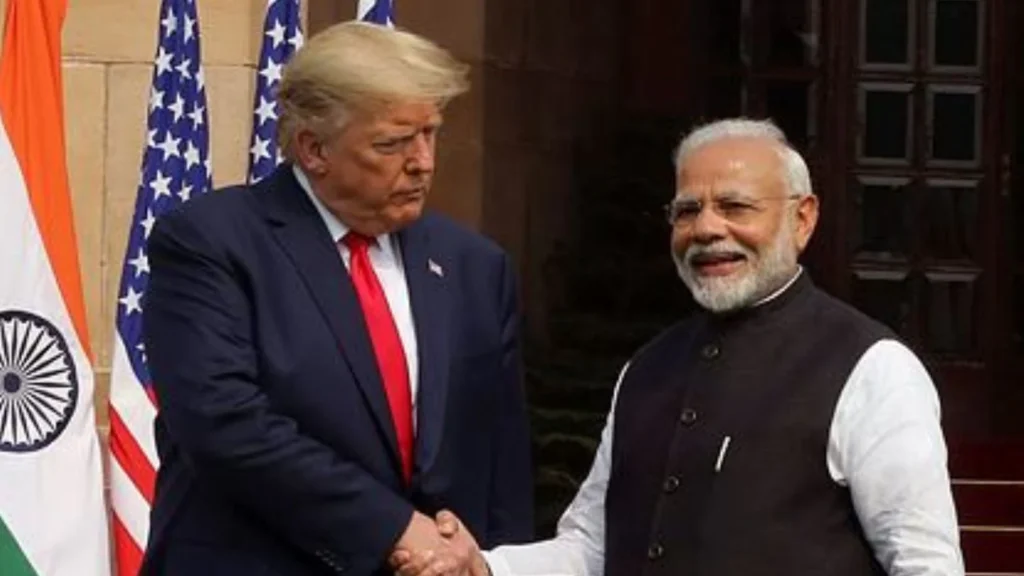
On Monday, 2 February 2026, US President Donald Trump announced a historic trade deal with India, effectively ending a year of high-stakes economic brinkmanship. Following a phone call with Prime Minister Narendra Modi, Trump confirmed that the United States would slash the 50 per cent punitive tariff on Indian goods, which had been in place since August 2025, to a unified 18 per cent. This move restores India’s market access by positioning its exports in a lower tariff bracket than those of regional rivals like Vietnam and Pakistan.
The breakthrough is being framed as a direct friendship deal between Trump and Modi, but it comes with a massive geopolitical price. According to the White House, India has agreed to completely halt its purchase of Russian oil, which had surged to nearly 40 per cent of its supply over the past two years. This shift marks a definitive pivot in India’s energy security strategy, trading discounted energy from Moscow for restored market access in the West.
Dismantling the reciprocal and punitive tariff wall
The new 18 per cent rate is a composite victory for Indian exporters who have faced a double blow over the last year. Previously, the Trump administration had levied a 25 per cent reciprocal tariff on all Indian goods, adding another 25 per cent as a penalty for India’s continued trade with Russia. By dropping both in favour of an 18 per cent baseline, the US is providing a lifeline to India’s textile, leather, and engineering sectors.
Also Read: India’s Budget 2026-27: A Defensive Pivot in an Era of Managed Disorder
Markets responded with immediate euphoria following the news of the agreement. The Nifty 50 and Sensex surged over 4 per cent in early Tuesday trade, led by a 20 per cent jump in textile and garment stocks. For India, this reduction is not just about cost but about reclaiming a competitive edge that was severely eroded when Washington began targeting New Delhi as a tariff king in 2024.
The Russian oil pivot and the 500 billion commitment
While Prime Minister Modi’s public statement focused on the tariff reduction and Made in India products, President Trump’s disclosure went further. He claimed that India has committed to buying over $ 500 billion in American energy, technology, and agricultural products. Most significantly, this includes a total cessation of Russian crude imports, with New Delhi shifting its energy security requirements toward US shale and potentially high-sulphur crude from Venezuela.
This realignment is expected to have a wind-down period for existing contracts loading in February. However, the intent is clear as India will no longer be the primary financier of the Russian energy machine. To compensate for the loss of Russian discounts and protect its energy security, the US is reportedly clearing the way for Indian refiners like Reliance Industries to resume large-scale imports from Venezuela, which had been previously blocked by sanctions.
Agriculture and the data centre trade-off
Beyond energy, the deal appears to have a significant Buy American component. The US Department of Agriculture has hailed the pact as a victory for American farmers, as India has agreed to lower its notoriously high barriers to dairy, fruits, and grains. This concession, long a sticking point in bilateral talks, was likely eased by the recent announcement in the 2026 Union Budget of tax holidays for foreign companies setting up data centres in India.
The budget provided the necessary incentives to make this deal possible. By offering tax breaks until 2047 for global cloud services operating out of India, the Modi government addressed a key US demand for tech infrastructure. This multi-sector trade-off involving energy security, data, and agriculture illustrates the new transactional nature of the relationship, where India’s trade status is tied directly to its willingness to realign with American strategic goals.
The Hinge Point
The 2 February 2026 announcement marks the exact moment when India’s strategic autonomy in the fuel sector ends and its integration into the Western economic sphere begins. This is the hinge point because it marks the formal end of the Russia-India-China axis that had defied Western sanctions for four years. The story changes here because India has chosen to prioritise its manufacturing output and its status as a US ally over its long-standing relationship with Moscow to preserve its long-term energy security.
What can no longer remain the same is the perception of India as a middle-power balancer. By agreeing to halt Russian oil trade in exchange for tariff relief, New Delhi has effectively picked a side in the global economic war. This move secures India’s future as a primary manufacturing hub for the West, but it also leaves the nation’s energy security vulnerable to US policy shifts. The trade-off is clear, as India has traded the short-term benefit of cheap Russian oil for the long-term prize of becoming the West’s indispensable democratic partner in Asia.