
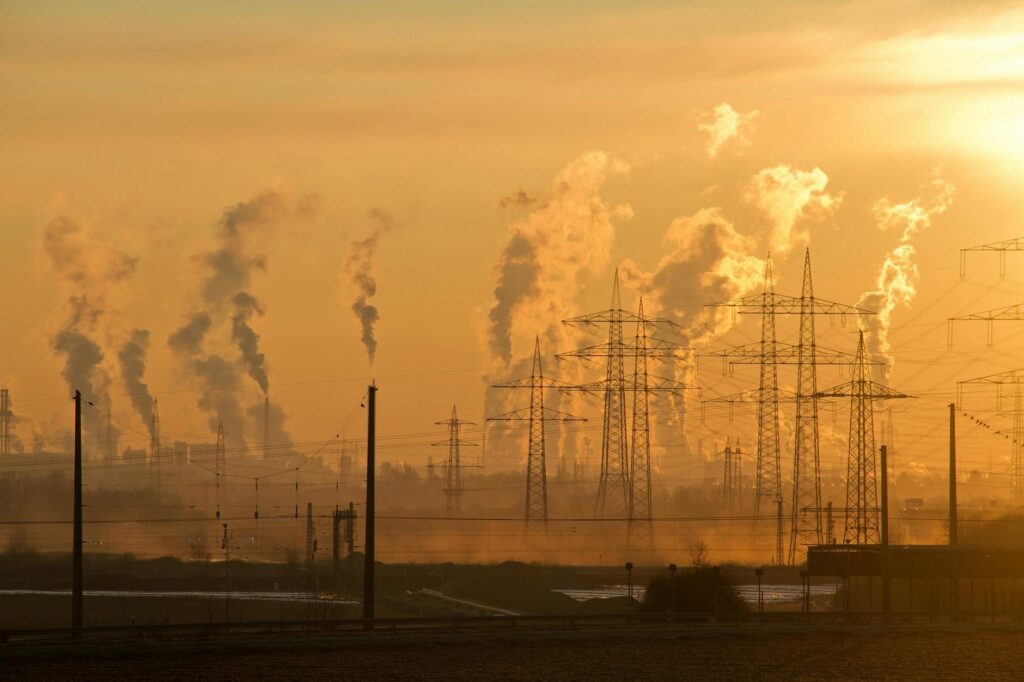
The Trump administration has finalised the repeal of the 2009 Endangerment Finding, effectively stripping the federal government of its primary legal mandate to regulate greenhouse gases
President Donald Trump and EPA Administrator Lee Zeldin announced what they characterised as the “single largest deregulatory action in U.S. history.” By rescinding the 2009 Endangerment Finding, the scientific determination that carbon dioxide and five other greenhouse gases (GHGs) threaten public health, the administration has dismantled the legal foundation for nearly two decades of climate policy. This move immediately nullifies federal GHG emission standards for all light, medium, and heavy-duty vehicles and sets the stage for a broader rollback of regulations affecting power plants and industrial facilities.
Also Read: Semantic Shifts and Staple Disputes: The New Confusion Over US-India Trade
The Legal Kill Shot to Climate Regulation
The core of the EPA’s new ruling rests on a pivot in statutory interpretation of environmental deregulation. Administrator Zeldin argued that Section 202(a) of the Clean Air Act does not grant the agency the authority to regulate emissions to address global climate change. By decoupling “air pollution” from greenhouse gases in the regulatory context, the EPA has essentially removed its own obligation to act. This “kill shot” strategy aims to make climate regulations invalid not just for the current term, but to prevent future administrations from easily re-establishing them without new, explicit authority from Congress.
Economic Windfalls versus Environmental Costs
The administration estimates that this environmental deregulation will save American taxpayers and consumers over $1.3 trillion. According to the EPA, removing measurement, reporting, and compliance requirements for vehicle manufacturers will result in average cost savings of $2,400 per new vehicle. Additionally, the ruling eliminates “off-cycle” credits for technologies such as the start-stop engine feature, which Zeldin described as a “climate participation trophy” with no material benefit to consumers.
However, the human and economic costs of the ruling are being fiercely debated. Non-partisan think tanks and environmental groups have warned that the rollback could lead to 17,000 pollution-related premature deaths by 2030. Furthermore, by resetting fuel economy requirements to 2024 levels, the U.S. risks falling behind global markets in the transition to electrification, potentially ceding technological leadership in the automotive sector to China and the European Union.
A Patchwork Future: State-Level Resistance
The federal retreat has triggered an immediate counter-offensive from “climate-forward” states. California Governor Gavin Newsom condemned the decision as a “reckless disregard for science” and confirmed that California, along with a coalition of 24 other states, will sue to challenge the repeal in the U.S. Court of Appeals for the D.C. Circuit. This sets up a “patchwork” regulatory environment in which automakers may have to navigate different standards across states, creating the very “regulatory chaos” the Trump administration claimed it was trying to solve.
Also Read: US Signals Readiness as Iran Sets Clear Red Lines
The Hinge Point
The new ruling is the exact moment where the United States officially exits the “Global Climate Consensus.” This is the hinge point because it shifts the burden of climate action from the federal government to the states, the courts, and the private sector. The story changes here because federal law is no longer being used as a shield against planet-warming emissions, but as a sword to cut through the existing bureaucratic framework of the last three presidencies.
What can no longer remain the same is the predictability of American climate policy on the world stage. By repealing the Endangerment Finding, the administration has signalled that it views climate change not as an existential threat to public health, but as a secondary economic concern that can be regulated away through environmental deregulation. This marks the end of the 2007 Massachusetts v. EPA era and the beginning of a high-stakes legal battle that will likely only be settled by the Supreme Court, determining the limits of executive power for decades to come.