
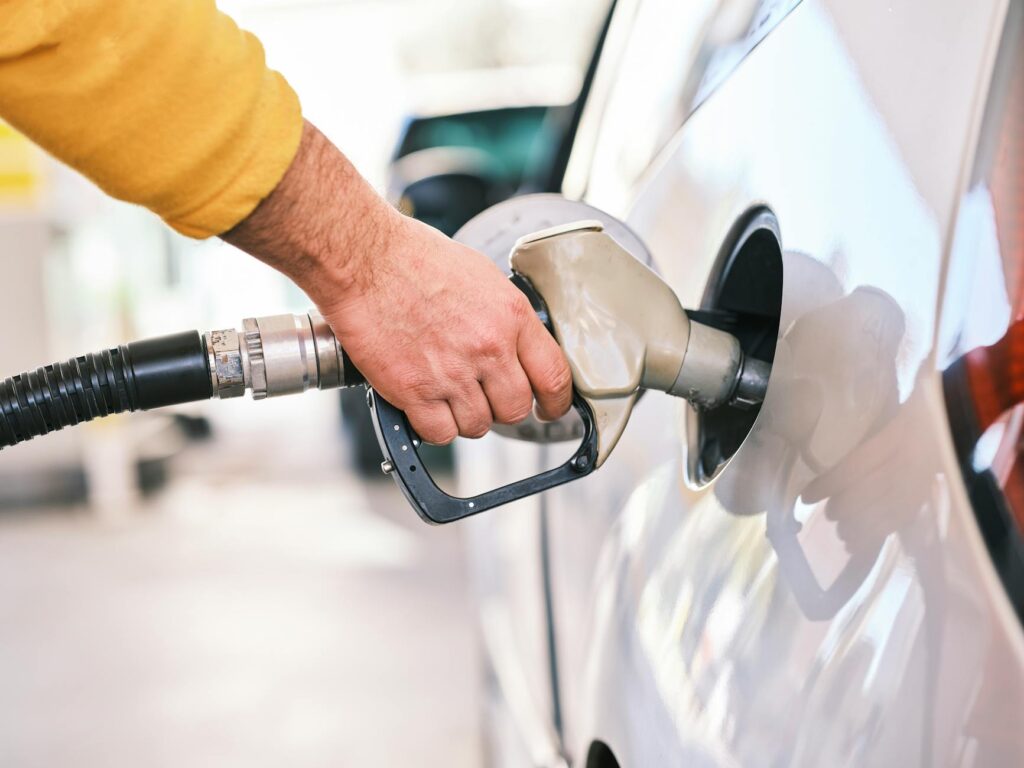
From Delhi pump queues to UK energy bills, the cost of the Iran war is landing on ordinary consumers
The US-Israeli military campaign against Iran, which began on 28 February 2026, has done what years of geopolitical warnings could not: it has physically severed the world’s most consequential oil and gas artery. The Strait of Hormuz disruption, which Iran declared closed to all shipping within days of the first strikes, has removed approximately one-fifth of global crude supply from active circulation. Brent crude, which was trading near $70 a barrel before the war, has since climbed past $100 and briefly touched $120. The IEA has described it as the largest supply disruption in the history of the global oil market.
The weight of this moment is not primarily about headline barrel prices. It is about what happens downstream: in Indian pump stations, where oil marketing companies are absorbing losses they cannot sustain indefinitely; in European gas storage facilities that entered 2026 at historic lows; and in UK households whose energy bills are governed by a price cap that resets in July. The shock is real, and it is travelling.
India: Absorbing the Blow on Borrowed Time
India imports nearly 88 per cent of its crude oil requirement, making it highly vulnerable to swings in global prices. Consequently, with Brent above $100, the arithmetic for Indian oil marketing companies has turned sharply negative. Despite the global price surge, officials have indicated that retail petrol and diesel rates in India are unlikely to be raised immediately. However, petroleum companies are reportedly preparing to revise prices by Rs 4 to Rs 5 per litre ahead of Holi, marking the first retail revision in over a year.
Also Read: Iran Strikes US Bases Across the Gulf After Khamenei’s Death
India’s energy minister announced steps to limit fuel use by certain businesses to prevent hoarding and black-market trading of oil and gas while supply remains constrained by the war. Meanwhile, the Trump administration issued a month-long waiver allowing India to purchase previously sanctioned Russian oil, a measure analysts describe as having limited practical effect while traffic in the Strait of Hormuz remains stalled.
Europe: The LNG Dependency Returns
Europe’s most pronounced vulnerability is its LNG exposure. If LNG flows via the Strait of Hormuz are curtailed, global spot availability tightens immediately, forcing Europe to compete with Asian buyers for flexible cargoes on the spot market, precisely what occurred during the 2021 to 2023 energy crisis. The Dutch TTF benchmark climbed above €60 per megawatt hour, a significant jump from the low €30s at the end of February. The structural problem compounds the price signal: Europe started 2026 with much lower gas storage levels than in recent years, at 46 billion cubic metres at the end of February, compared to 60 bcm in 2025 and 77 bcm in 2024.
France’s President Macron raised the possibility of releasing 20 to 30 per cent of emergency strategic reserves to ease pressure on consumers, as G7 finance ministers convened emergency talks. European LNG futures prices have increased by 77 per cent compared to prices before the conflict began, a rate exceeding the spike seen immediately after Russia’s invasion of Ukraine.
The United Kingdom: July Is the Reckoning
The Office for Budget Responsibility has warned that the energy spike could add 1 percentage point to UK inflation in 2026. Chancellor Rachel Reeves has said the war is likely to put upward pressure on inflation over the coming months. The specific exposure for British households lies in the Ofgem price cap mechanism. Analysts at Cornwall Insight forecast that household energy bills could rise by 10 per cent from July, with the price cap for July to September surging to £1,801 a year for a typical dual fuel household.
The situation renewed political debate over the North Sea’s Energy Profits Levy, though analysts noted that additional drilling would be unlikely to reduce UK energy bills in the short term, as oil and gas produced there is sold at global prices.
Also Read: Sitharaman Holds the Line on Crude and Inflation
The Hinge Point
The debate about this crisis has been framed almost entirely around duration: how long will the war last, how quickly will Hormuz reopen, and when will prices correct? That framing misses what the data already shows. Even if the conflict ends, oilfields forced to shut in across the Middle East could take days, weeks, or months to return to normal output, depending on the nature of the shutdown. Qatar’s LNG facilities, which supply roughly a fifth of global LNG, declared force majeure; restoration timelines are measured in months, not weeks.
The Strait of Hormuz disruption, therefore, is not a temporary interruption that prices will reverse once shooting stops. Supply infrastructure takes longer to repair than diplomatic communiqués take to issue. India’s government holds roughly 25 days of strategic reserves and is already rationing consumption by select industries. Europe holds storage at its lowest level in three years, entering a refilling season that now competes with Asia for scarce spot cargoes. The UK’s price cap insulates households only until July, after which the full wholesale shock transmits directly to bills.
A more severe scenario in which the conflict persists for several months could see oil prices rise to around $130 per barrel. The euro-zone economy would probably contract in Q2 and flatline over the second half of the year. Notably, oil-producing countries outside the warzone, Norway, Russia, and Canada, will benefit from high oil prices without the risk of missile and drone attacks. The redistribution of energy income is already underway. The question is not whether importing nations will pay. The question is how much of the cost arrives before the fighting ends, and how much arrives after.