
A wartime parliament address signals that India’s oil and food security face a prolonged test
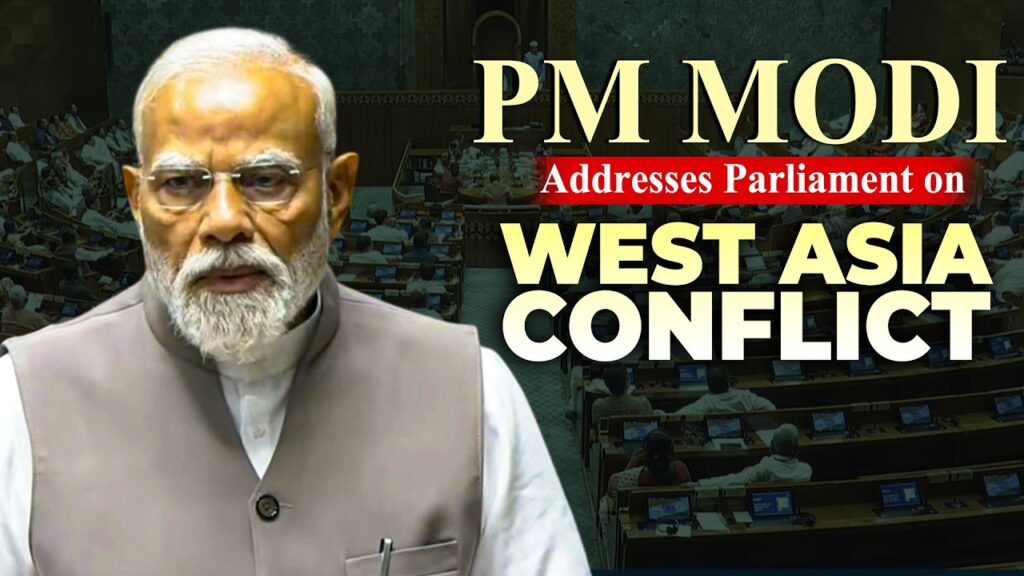
Prime Minister Narendra Modi addressed the Lok Sabha with a warning that carried unusual weight. The West Asia crisis, now in its third week, is not a temporary shock. It is, in his framing, a sustained test of national endurance, and he reached for the COVID-19 pandemic as the only adequate benchmark.
The comparison was not rhetorical decoration. It was a statement of duration and of demand. India, he told Parliament, faces challenges that are simultaneously economic, security-related, and humanitarian. Coastal security, border agencies, and cybersecurity infrastructure have all been placed on heightened alert. State governments received a direct instruction: act swiftly against hoarding, black-marketing, and the spread of misinformation.
India’s Energy Exposure Defines the Stakes
Specifically, the Strait of Hormuz is where India’s vulnerability is most acute. India imports crude oil, natural gas, and fertilisers through shipping corridors that now run through a war zone. The government holds 5.3 million metric tonnes of strategic petroleum reserves, with plans to expand that to 6.5 million metric tonnes. Meanwhile, India has broadened its crude import base from 27 source countries a decade ago to 41 today. However, diversification of suppliers does not neutralise the risk of a choked transit route.
Also Read: India’s New Tax Regime Raises the Floor for 1.2 Crore Taxpayers
A Decade of Preparation, One Bottleneck
Notably, the Modi government has spent the better part of ten years reducing energy dependence through railway electrification, green energy expansion, and fertiliser stockpiling. Consequently, those investments now serve as partial insulation. However, the Strait of Hormuz remains the sole corridor through which a significant share of India’s fuel and fertiliser imports must pass. The government confirmed it is in active diplomatic contact to keep those maritime corridors operational.
The Domestic Front Requires Equal Vigilance
Meanwhile, Modi’s instruction to state governments reveals a secondary theatre: the domestic response. Pandemic-era India saw supply chains buckle not only from logistical failure but also from panic-driven hoarding and information disorder. Therefore, the government’s pre-emptive warning about fake news and black marketing is not precautionary language. It reflects a specific lesson absorbed from 2020 and 2021. The social stability of a national emergency depends as much on information discipline as on reserve stocks.
What the COVID Comparison Actually Carries
The West Asia crisis entered the Indian parliamentary debate on 23 March not solely as a foreign policy matter but as a question of domestic preparedness. Modi’s invocation of COVID is the structural tell. During the pandemic, India mobilised supply chains, enforced compliance across state governments, and communicated a single national resolve. He is signalling that the same response architecture must now be activated, with the same expectation of cooperation between citizen and state.
Also Read: India’s Trade Deals Are Becoming a Signal, Not Just a Strategy
The Hinge Point
The pandemic comparison works as political framing. However, it also names a structural reality that most commentary is avoiding. India’s decade-long effort to build strategic resilience, from petroleum reserves to diversified import partners, was designed precisely for a moment like this. The West Asia crisis is the first live test of whether that infrastructure holds under genuine wartime pressure on global supply routes. Modi went to Parliament not to announce a new policy but to confirm that the existing architecture is now operational. The COVID reference is not nostalgia. It is an instruction: the response protocol already exists, and the expectation is that it will be followed.