
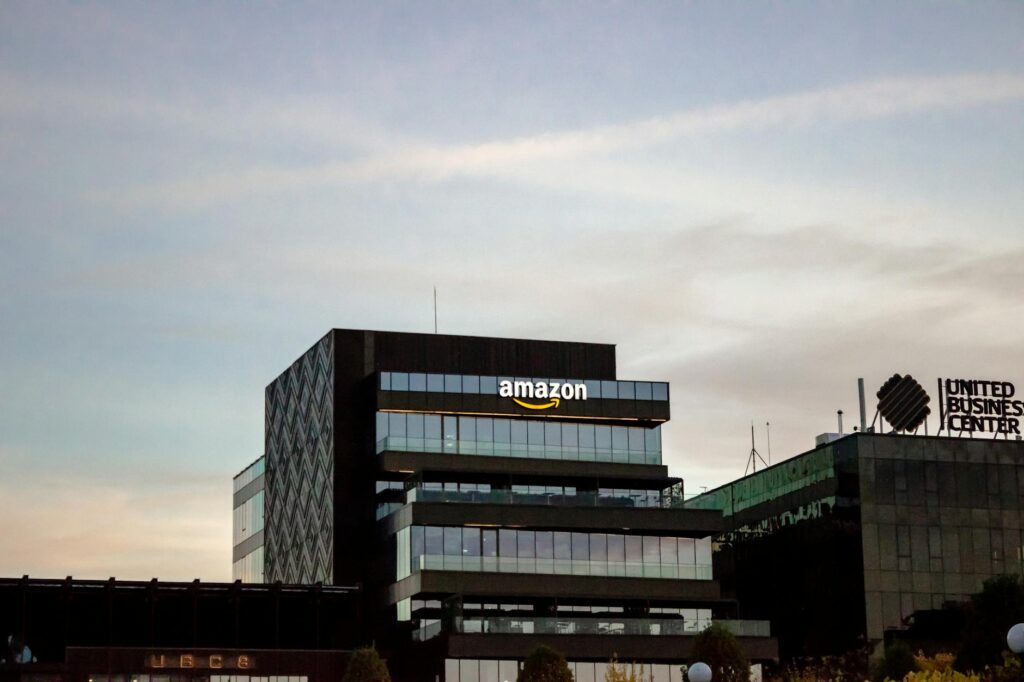
Amazon is reportedly in talks to invest up to 50 billion dollars in OpenAI, a move that would position the e-commerce giant as a dominant force
Amazon is exploring a massive strategic investment of up to 50 billion dollars in OpenAI, according to reports emerging on 29 January 2026. The negotiations, reportedly led by Amazon CEO Andy Jassy and OpenAI chief Sam Altman, could see Amazon become the largest single contributor to OpenAI’s current fundraising round. This unprecedented capital injection is part of an effort to raise a total of 100 billion dollars, potentially valuing the ChatGPT creator at approximately 830 billion dollars.
The potential deal arrives at a time of intense fiscal duality for Amazon. Just days ago, the company announced a second round of major corporate layoffs, affecting roughly 16,000 employees as part of a broader plan to eliminate 30,000 corporate jobs by mid-2026. However, the willingness to commit 50 billion dollars to a single partnership underscores a fundamental reallocation of resources toward the frontier models and AI infrastructure that Amazon believes will define the next decade of global computing.
Balancing the rivalry with Anthropic
Amazon’s pursuit of OpenAI creates a complex strategic dynamic, as the company has already invested roughly 8 billion dollars in Anthropic, OpenAI’s primary rival. By backing both entities, Amazon is effectively adopting a multi-model strategy, ensuring that Amazon Web Services remains the neutral ground for the world’s most powerful artificial intelligence. This hedge prevents Amazon from being locked into a single ecosystem while allowing it to offer a broader range of high-end capabilities to its enterprise cloud customers.
Also Read: Meta acquires Manus as AI competition enters a consolidation phase
This investment would also signal a shift away from OpenAI’s reliance on Microsoft. While Microsoft remains a key partner, a massive infusion of capital from Amazon could reduce OpenAI’s exclusive reliance on Azure for computing power. If the deal includes a commitment from OpenAI to utilise AWS AI infrastructure or Amazon’s custom chips, it would represent a significant win for AWS in its ongoing market-share battle with Microsoft and Google Cloud.
Massive burn rates and the push for profitability
The primary driver behind OpenAI’s staggering 100 billion dollar funding goal is its rapidly rising operational costs. Internal projections reportedly show that OpenAI could face losses of up to 14 billion dollars in 2026 alone, with a cumulative cash burn of nearly 115 billion dollars through 2029. These astronomical figures reflect the immense price of training next-generation models and maintaining the massive data centre footprint required to run ChatGPT at a global scale.
To bridge this financial gap, OpenAI is exploring new revenue streams, including specialised professional tools like the recently launched Prism workspace for scientists. By providing a dedicated research environment, the company is seeking to monetise the high-intent academic and corporate sectors. The $ 50 billion investment from Amazon would provide the necessary war chest to sustain this AI infrastructure as the company matures toward a potential $ 1 trillion IPO.
Global competition and the massive capital bets
Amazon and OpenAI are not alone in this capital-intensive race. Japanese conglomerate SoftBank is separately in talks to invest an additional 30 billion dollars in OpenAI, building on its existing stake. NVIDIA and Microsoft are also reportedly in discussions for smaller but significant tranches. This flurry of deals suggests that the barrier to entry for frontier AI infrastructure has reached a point where only a handful of the world’s most capitalised firms can participate.
For OpenAI, the involvement of diverse backers like Amazon and SoftBank provides a degree of strategic autonomy. For Amazon, the deal is a defensive necessity to prevent a total Microsoft-OpenAI monopoly. As the EU AI Act begins to take full effect in August 2026, having multiple major Western backers may also provide a layer of political and regulatory protection for OpenAI as it navigates increasingly stringent compliance landscapes in Europe and the United States.
The Hinge Point
The reported $ 50 billion negotiation between Amazon and OpenAI is the exact moment when the model wars transform into an AI infrastructure war. This is the hinge point because it shows that the cost of staying at the frontier of artificial intelligence has exceeded traditional venture capital’s capacity, requiring the direct intervention of hyperscale cloud providers. The story changes here because OpenAI is effectively being integrated into the foundational plumbing of the global internet, moving from a revolutionary startup to a core utility of the AWS and Microsoft ecosystems.
What can no longer remain the same is the idea of OpenAI as an independent disruptor. By accepting a $ 50 billion check from the world’s largest e-commerce and cloud provider, the company is trading its autonomy for survival in a market with a $ 14 billion annual loss. This marks the end of the independent lab era and the beginning of a corporate-consortium model of development, where the future of human intelligence is co-authored by a handful of tech titans who control the chips, the power, and the physical AI infrastructure.