
Copenhagen’s warning signals a shift from dismissing rhetoric to defending sovereignty as Arctic tensions sharpen
Denmark’s prime minister, Mette Frederiksen, publicly warned Donald Trump against any notion of a Greenland invasion. The statement followed renewed remarks linked to Trump’s long-standing interest in acquiring Greenland, which resurfaced amid a charged US election cycle.
The warning matters now because it reframes loose political talk as a security issue. It also places Greenland invasion firmly within alliance politics, not as a speculative idea but as a red line for a NATO member.
Background that refuses to fade
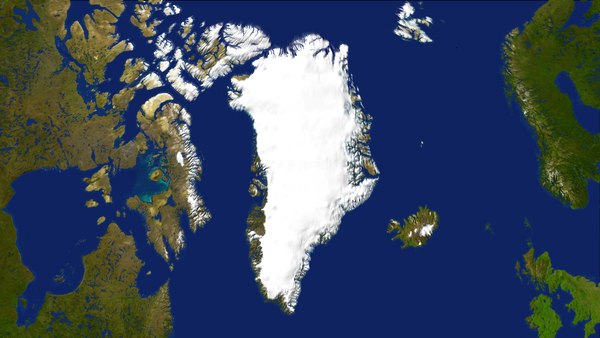
Greenland, an autonomous territory within the Kingdom of Denmark, has strategic value due to its location, resources, and Arctic access. During Trump’s presidency, his proposal to buy Greenland was dismissed as unserious. However, the idea never fully disappeared from political memory.
Since then, Arctic competition has intensified. As a result, any Greenland invasion rhetoric now lands in a very different global environment. Therefore, Denmark’s response reflects accumulated unease rather than a single comment.
Also Read: Epstein files name Donald Trump as passenger on multiple private jet flights
Why is the timing different this time
This warning arrives amid rising geopolitical friction in the Arctic. Russia has expanded its northern military posture, while China has described itself as a near-Arctic state. Meanwhile, the US has increased strategic focus on polar routes and rare earth supply chains.
Against this backdrop, even hypothetical Greenland invasion talk unsettles allies. Consequently, Copenhagen chose clarity over quiet diplomacy. It signalled that sovereignty is non-negotiable, regardless of who raises the idea.
Implications for alliances and security
Denmark’s statement tightens expectations within NATO. While the alliance centres on collective defence, it also relies on trust among members. Any suggestion of territorial coercion, even rhetorical, strains that trust.
Moreover, Greenland invasion language forces Denmark to assert authority over defence policy for the island. Greenland controls many domestic affairs, yet security remains a Danish responsibility. Hence, Copenhagen must speak firmly to avoid ambiguity.
Global relevance beyond Denmark
The episode highlights how Arctic governance is shifting from cooperation to deterrence. As climate change opens sea lanes and access to minerals, major powers reassess positions. Therefore, small territories gain outsized importance.
For the US, allies now expect discipline in language. For Europe, this moment reinforces the need to treat the Arctic as a frontline, not a fringe. Greenland invasion talk thus echoes far beyond Copenhagen and Washington.
The Hinge Point
Denmark’s warning marks the point where casual power talk stops being dismissed and starts being treated as a strategic risk. Until now, Trump’s Greenland comments lived in the realm of political theatre. That space has closed.
What changes here is accountability. By responding publicly, Denmark establishes that alliance norms apply even to rhetoric. No NATO member can float ideas of territorial acquisition without triggering consequences. This recalibration matters because it draws a boundary between influence and coercion.
The story turns because Greenland is no longer a curiosity in the imagination of great powers. It is a test case for how democracies handle ambition, alliance discipline, and sovereignty in contested regions. From this point, Greenland invasion is not a punchline. It is a line that cannot be crossed.