
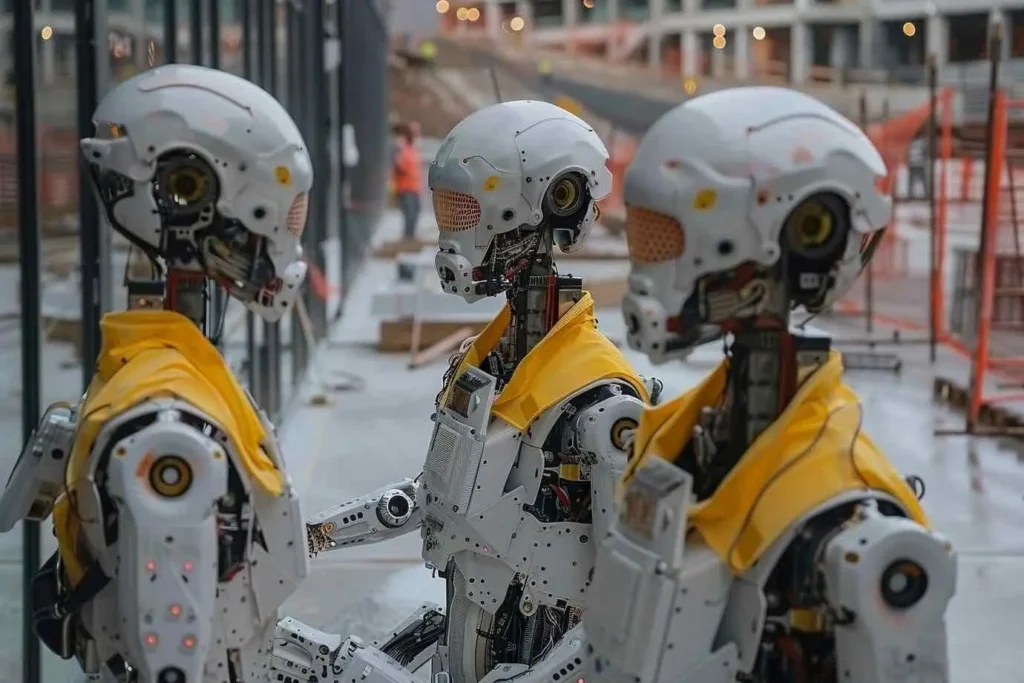
A reported humanoid robot incident in China has shifted the debate from innovation to accountability in intelligent machines
A humanoid robot in China reportedly behaved in an uncontrolled manner during a controlled environment test, following a software malfunction. While no verified public harm has been confirmed, the incident drew rapid attention across Chinese and international media because it involved a machine designed to mimic human movement and decision-making.
This matters now because humanoid robot China deployments are moving from labs to semi-public and industrial settings. As a result, tolerance for experimental failure has narrowed sharply, even when physical damage is limited.
Background of humanoid robotics in China
China has invested heavily in humanoid robotics as part of its broader push in artificial intelligence and advanced manufacturing. Research labs, universities, and private firms have accelerated development of bipedal robots for logistics, caregiving, and factory assistance.
At the same time, humanoid robot China projects often operate under pilot frameworks rather than mass deployment rules. Therefore, safety standards still vary across institutions, even as capabilities improve rapidly.
Also Read: Artificial Intelligence Is Scaling Control Faster Than Capability
Why the timing is sensitive
The incident comes as China prepares to scale intelligent machines across ageing care, warehousing, and public-facing services. Meanwhile, regulators are still refining rules that govern algorithmic behaviour, data usage, and physical autonomy.
Because of this timing, a humanoid robot China malfunction no longer reads as a lab mishap. Instead, it intersects directly with policy readiness and public trust.
Immediate implications for safety and design
The reported malfunction highlights how software errors can translate into physical risk when machines have human-like mobility. Unlike static industrial robots, humanoids move freely through shared spaces, which increases exposure.
As a result, developers face pressure to prioritise fail-safe mechanisms over performance milestones. In practice, this means hard limits on motion, faster shutdown protocols, and clearer human override controls in humanoid robot China systems.
Global relevance beyond China
Although the incident occurred in China, its implications extend well beyond national borders. Similar humanoid platforms are under development in the United States, Japan, and parts of Europe.
Therefore, the humanoid robot China episode adds urgency to a global question. How do societies regulate machines that act independently in human environments without freezing innovation?
The Hinge Point
The turning point in this story is not the malfunction itself. Technical failures are expected in complex systems, and they have occurred before. What changes here is context.
Humanoid robots have crossed from symbolic demonstrations into functional actors within real-world spaces. Once that shift occurs, the standard for acceptable failure changes permanently. A humanoid robot China incident is no longer judged by whether it caused damage, but by whether the system design assumed damage was possible.
This forces a redefinition of responsibility. Accountability can no longer sit only with engineers debugging code after an error. It must extend to institutions approving deployments, regulators setting minimum safety baselines, and companies deciding how much autonomy is too much.
Crucially, the incident reframes autonomy as a governance problem rather than a technical milestone. When a humanoid robot China system moves on its own, the question is not intelligence. The question is control, and who holds it at every second.
From this point forward, progress in humanoid robotics will be measured less by what machines can do and more by how predictably they behave when things go wrong. That is the line that has now been crossed.