
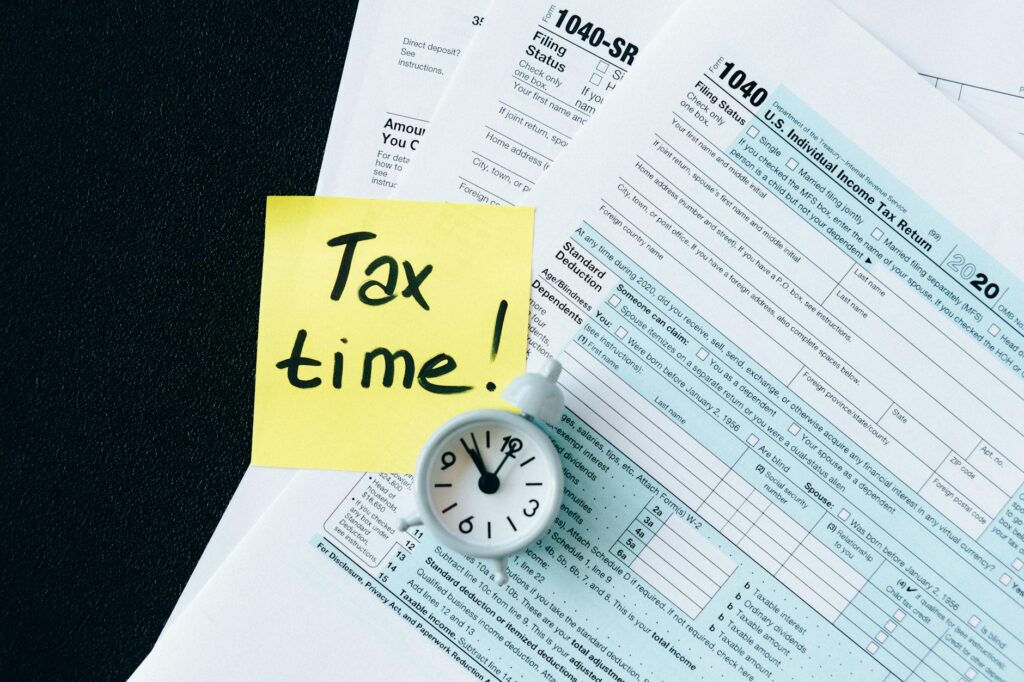
Parliament’s revised income slabs promise relief but quietly redraw who files and who benefits
The Union Budget’s income tax changes take effect from 1 April, reshaping the financial calculus for salaried employees, small business owners, and senior citizens across India. The nil-tax ceiling under the new regime rises to Rs 12 lakh, with a marginal relief provision extending effective zero-tax treatment to incomes just above that threshold. For a working population that has absorbed two years of static slabs, the revision arrives with immediate arithmetic consequence.
The scale of that consequence is not trivial. The government estimates roughly 1.2 crore taxpayers will exit the tax net entirely. That figure alone signals a structural shift, not an incremental adjustment.
The Architecture of the New Slabs
The revised slab structure retains the new tax regime as the default framework, with rates stepping from nil to 30 per cent across six income bands. The standard deduction for salaried individuals holds at Rs 75,000. Taxpayers who remain in the old regime retain access to 80C deductions and HRA exemptions, but the new regime’s improved slab progression narrows the effective advantage of staying outside it for most middle-income earners.
Also Read: India’s Budget 2026-27: A Defensive Pivot in an Era of Managed Disorder
Why This Revision Arrives Now
Consumption data from the second half of 2024 showed softening in urban demand. Simultaneously, direct tax collections had exceeded revised estimates, giving the Finance Ministry room to offer relief without compromising the fiscal deficit target. The timing reflects a government confident enough in its revenue base to absorb a narrower collection net, while using the release to support household spending ahead of an uncertain global trade environment.
Who Gains, Who Recalculates
Salaried earners between Rs 8 lakh and Rs 12 lakh gain the most direct benefit. Consequently, those holding legacy tax-saving instruments, specifically life insurance endowment plans and ELSS funds acquired primarily for the 80C deduction, face a recalculation. The old regime’s logic weakens further when the gap between effective rates across regimes narrows. Senior citizens additionally see higher TDS thresholds on interest income, reducing the compliance friction that has historically burdened fixed-deposit-dependent households.
The Compliance Shift Beneath the Relief
Notably, fewer filers in the tax net does not mean fewer people interacting with the tax system. TDS obligations on employers and banks remain unchanged. Therefore, the administrative load shifts upward in the chain, from individual filers to institutions processing deductions. This pattern mirrors reforms in several Southeast Asian economies, where base-broadening was followed by targeted threshold relief, keeping compliance infrastructure intact while reducing the direct filing population.
Also Read: India’s GST Mop-Up Hits Rs 1.83 Lakh Crore in February
The Hinge Point
The income tax changes are, at the surface level, a relief measure. The deeper movement runs in the opposite direction. By making the new regime structurally superior for a larger share of earners, the government accelerates the redundancy of deduction-linked financial products. Insurance products sold as tax instruments, five-year bank deposits chosen for 80C benefits, and ELSS funds bought in March lose their primary justification for a growing segment of the market. The financial services industry built significant retail distribution on that justification. What reads as a taxpayer-friendly budget intervention is simultaneously a slow dismantling of the deduction economy that has shaped Indian household finance for three decades. The relief is real. So is the restructuring it quietly authorises.