
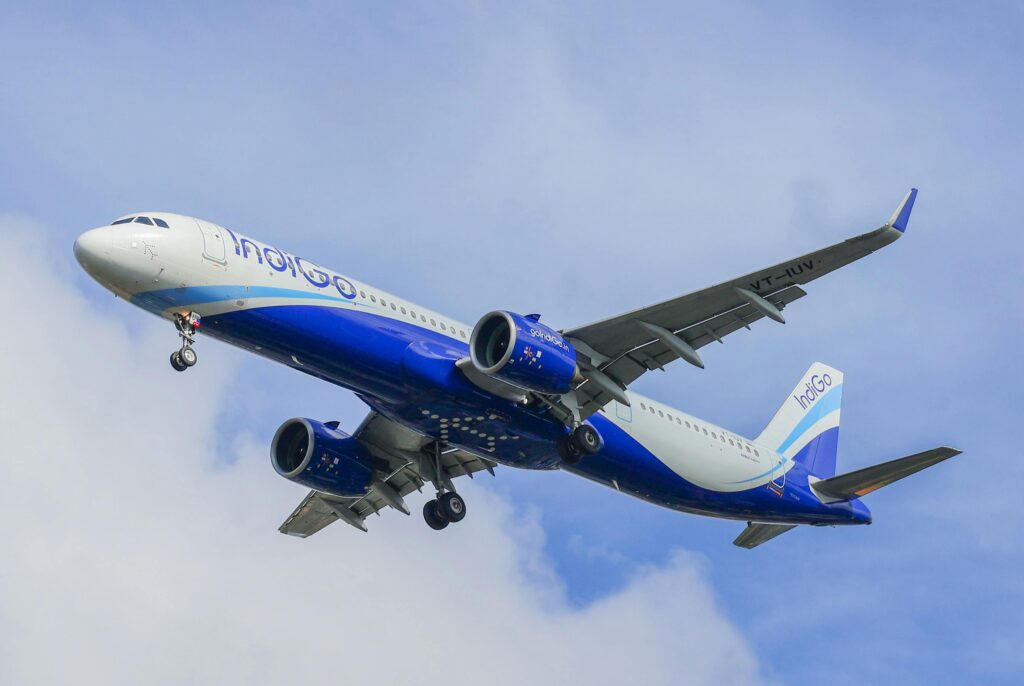
Stock falls 3% after the airline cuts revenue outlook, while CEO Pieter Elbers prepares for a crucial regulatory meeting
InterGlobe Aviation, the parent company of India’s largest airline, faced significant turbulence on the stock market this morning. Investors reacted sharply to a revised revenue outlook, which caused IndiGo shares slip by over 3 per cent in early trading. The airline warned that its third-quarter earnings might fall short of initial expectations due to dampening yields and operational headwinds. Furthermore, market sentiment worsened upon news that CEO Pieter Elbers is scheduled to appear before the Directorate General of Civil Aviation (DGCA) later today.
Yield Pressures Weigh on Stock
The primary trigger for the sell-off appears to be the airline’s admission of softening passenger yields. While travel demand remains robust across India, aggressive capacity addition by competitors has forced ticket prices down. Consequently, the airline revised its guidance for Revenue per Available Seat Kilometer (RASK). Analysts noted that this adjustment immediately made IndiGo shares slip as the market priced in the potential impact on profitability. High fuel costs and airport charges continue to squeeze margins, leaving little room for error in pricing strategies. Therefore, the revised numbers suggest that the festive quarter might not generate the record-breaking profits investors had hoped for.
Also Read: IndiGo Crisis Deepens: Government Mandates Capacity Cut After Mass Flight Disruptions
Regulatory Heat Intensifies
Adding to the financial gloom is the regulatory spotlight. CEO Pieter Elbers has been summoned by the aviation watchdog, the DGCA, to address mounting consumer complaints. These grievances largely pertain to flight delays and recent safety-related incidents. Although such meetings occur periodically, the timing has made investors nervous. The uncertainty surrounding potential regulatory penalties or mandated operational changes contributed to the reason why IndiGo shares slip today. Any strict directive from the DGCA could potentially hamper the airline’s efficiency or increase compliance costs in the near future.
Long-term Growth vs Short-term Pain
Despite the current dip, market watchers remain divided on the long-term implications. Some experts argue that this correction was necessary given the stock’s high valuation. They believe that once the meeting concludes and clarity emerges, the stock might stabilise. However, others warn that persistent grounding of aircraft due to engine issues continues to plague the carrier. Until the supply chain stabilises, operational volatility will persist. Thus, we may see IndiGo shares slip further if the management does not provide a reassuring roadmap for the upcoming quarters during the next earnings call.
The Hinge Point
The headlines focus on the revenue guidance, but a deeper look suggests a structural bottleneck is the real culprit. The reason IndiGo shares slip is not just about cheaper tickets, but the cost of inefficiency. With over 70 aircraft grounded due to Pratt & Whitney engine issues, the airline is leasing older, less fuel-efficient planes and extending leases on aging fleet members to maintain market share. This stop-gap strategy protects their slot dominance but severely erodes operating margins. Therefore, today’s drop reflects a market realization that “capacity growth” is currently coming at a significantly higher cost per seat than in previous years.