
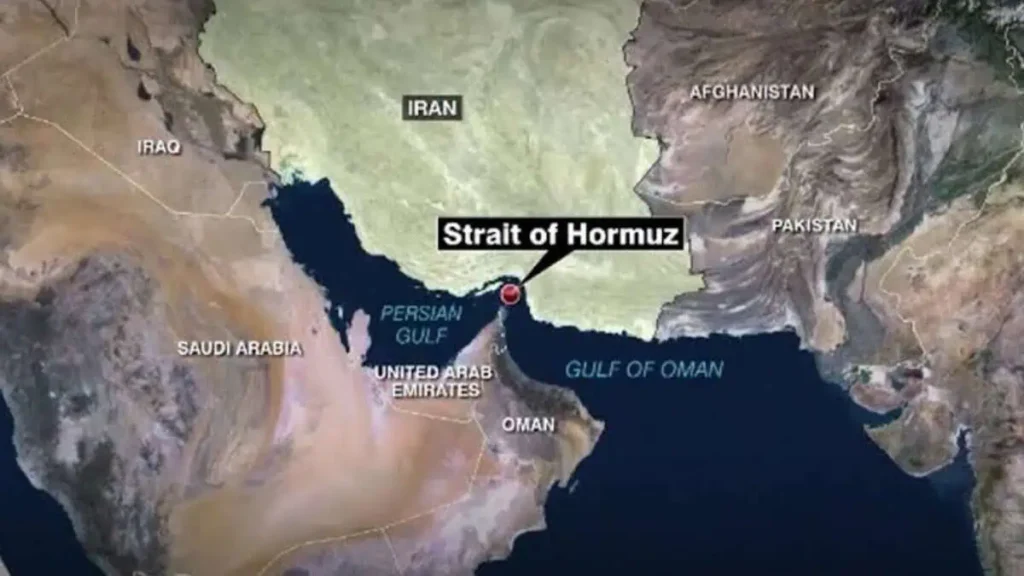
Tensions involving Iran’s strategic chokepoint near the Strait of Hormuz are driving anxiety across energy markets and price charts
Global energy markets are under pressure as Iran’s latest threats against the Strait of Hormuz have amplified uncertainty around oil supply. The narrow waterway remains one of the most important maritime routes in the world, carrying nearly 20 to 25 per cent of global crude and liquefied natural gas shipments daily, as reported.
Prices have fluctuated sharply in recent days as traders try to balance the risk of geopolitical disruptions with fundamentals such as inventory levels and supply from other regions. While some recent diplomatic signals eased fears, the prospect of a supply shock remains real because of how critical Hormuz is to global energy flows.
Why this matters for global supply
The concern centres on Iran’s capability to disrupt shipping through Hormuz, even temporarily. Markets react swiftly because even short delays or escalations in naval tensions can pull millions of barrels per day out of effective circulation, pushing prices upward. Goldman Sachs has warned that a significant disruption could send Brent crude above $90 to $100 a barrel in certain scenarios of curtailed flows.
That risk premium has already shown up in price moves earlier this week, while traders weigh diplomatic messaging and military signalling from Tehran and Washington. Even if a full blockade is unlikely, any threat from Iran, as it faces internal and external pressures, forces market participants to reassess risk models.
Also Read: China’s military drills near Taiwan signal a recalibration, not a routine show of force
How traders and producers are reacting
The oil markets on edge thesis reflects how quickly sentiment can amplify technical supply risks. After geopolitical flare-ups involving Iran and related regional actors, Brent crude and other benchmarks have seen significant swings. Some analysts note that the risk premium embedded in futures pricing is as much about perception of escalation as actual physical disruption.
At the same time, markets are mindful of other supply factors such as rising inventories in some regions and anticipated increases from Venezuelan output. These elements temper the risk of an outright price surge, but they do not erase it. Traders have also factored in tanker lay-ups and near-Gulf shipping insurance cost increases as auxiliary indicators of heightened geopolitical stress.
Why this breaks old assumptions about volatility
For years, energy markets treated risks to the Strait of Hormuz as episodic and often short-lived. Traditional models assumed that even in times of tension, global infrastructure and naval presence would prevent a real supply cutoff. The current environment breaks that assumption by showing that a combination of internal Iranian politics, regional proxy dynamics, and external military signalling can keep the oil markets on edge for longer periods.
In past cycles, price volatility following a geopolitical flare-up often subsided once diplomatic channels reopened. Today, the threat calculus is crowded with variables including domestic unrest in Iran, external military threats, and broader supply shifts involving OPEC members and major producers outside the Middle East. Traders are no longer treating Hormuz disruptions as abstract risks; they factor them directly into pricing and risk management strategies.
The Hinge Point
What makes today’s oil markets on edge is the convergence of geopolitical and market fundamentals. Not long ago, disruptions at a chokepoint like Hormuz would trigger a brief risk rally, followed by a correction. Now markets continuously embed the possibility of repeated flare-ups into trading models rather than treating them as one-off events.
This forces a deeper shift in how producers, consumers, and investors think about risk. Instead of isolating Hormuz as merely a regional concern, global energy systems now treat volatility there as a structural factor in long-term planning. That means higher insurance costs, contingency oil storage strategies, and new hedging approaches that were once the province of niche risk desks.
In practice, this repositioning changes cost structures for major importers, especially in Asia, which rely heavily on oil and gas transiting through Hormuz. It also reframes diplomatic strategy: for policymakers, preventing supply shocks no longer means managing markets alone but stabilising geopolitical flashpoints. This shift in approach, driven by sustained anxiety rather than short bursts of fear, is the real reason oil markets are on edge.