
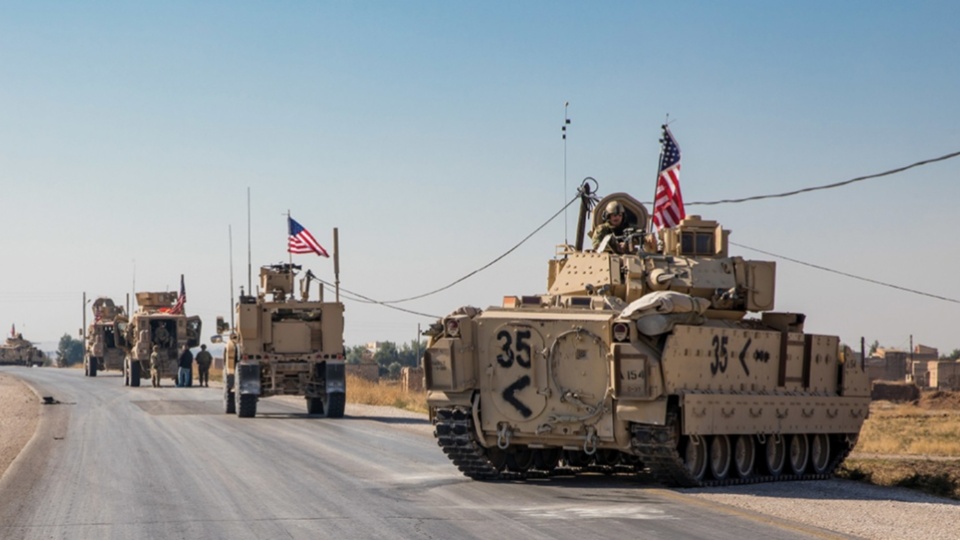
The United States carried out fresh strikes across Syria as part of ongoing retaliation against ISIS following a deadly attack on American personnel
On 10 January 2026, the United States military conducted US strikes in Syria targeting Islamic State (ISIS) positions across several regions of the war-torn country. These actions were announced by the US Central Command and framed as part of a sustained retaliation following a December ambush that killed two American soldiers and a civilian interpreter near Palmyra, Syria.
This latest wave of US strikes in Syria follows an operation begun in December. It underscores Washington’s determination to degrade remaining ISIS cells and protect American and partner forces in the region.
Background of Recent US Strikes in Syria
Also Read: Denmark draws a hard line as Trump talk revives Greenland invasion fears
The current campaign of US strikes in Syria is part of Operation Hawkeye Strike, launched in response to the Palmyra attack on 13 December 2025. That incident, carried out by a gunman linked to ISIS, marked the first US military deaths in Syria since the fall of the Assad regime and pushed the administration to escalate counter-ISIS operations.
Before the January wave, the United States and allied forces carried out large airstrikes in December that hit about 70 ISIS targets, including infrastructure and weapons sites. The strikes involved a mix of fighter jets, attack aircraft, helicopters, and precision munitions.
Timing and Scope of the Attacks
The recent US strikes in Syria occurred around midday Eastern Time on 10 January and were described as extensive, with at least 35 locations targeted and more than 90 precision munitions fired. A mix of aircraft, including F-15s, A-10s and drones, participated in the operation. No confirmed casualty figures have been released by US authorities.
These operations are the first reported in Syria this year and represent the second major wave of Hawkeye Strike air operations since December. Partner forces, including those from Jordan, took part alongside US units.
Broader Implications for the ISIS Fight
The continued US strikes in Syria come as ISIS has sought to regroup after losing territorial control in previous years. Though defeated as a proto-state, sleeper cells remain active across Syria and Iraq, carrying out sporadic attacks.
The United States has roughly 1,000 troops in Syria, engaged in counter-terrorism missions with both local and international partners. Recent moves by the Syrian government to renew cooperation with the United States in the global fight against ISIS reflect shifting dynamics on the ground since the civil war’s end and the ouster of Bashar al-Assad in 2024.
Global and Strategic Relevance
These US strikes in Syria fit within a broader pattern of American military responses to threats against its personnel and interests abroad. From unilateral strikes on ISIS infrastructure to limited engagements against state and non-state actors in Iraq, Afghanistan and beyond over the past decade, Washington has consistently used precision force as a deterrent and counter-terror tool.
This build-up of military pressure also influences the post-civil war settlement in Syria. US engagement with the Syrian government and local forces signals a shift from purely unilateral anti-ISIS operations to more coordinated security efforts with Damascus, complicating regional geopolitics.
The Hinge Point
The decisive shift in this ongoing conflict is not that the United States conducted another round of strikes, but that US strikes in Syria have become embedded within a broader, cooperative counter-terrorism posture that includes elements of the Syrian government, regional allies and international partners. For much of the past decade, US action in Syria focused on supporting local militias and conducting independent raids against ISIS remnants. The current operations mark a departure: Washington is now aligning more closely with formal state structures in Damascus while retaining the right to strike insurgent targets as a sovereign security priority.
This change matters because it reframes the US military presence from temporary anti-ISIS missions to a more enduring role within a complex Syrian security architecture. That shift alters how local actors calculate risk, affects regional alliances and changes expectations in Washington about the sustainability of counter-terror strategies. The era of isolated, periodic US strikes in Syria has given way to sustained military engagement layered onto evolving diplomatic ties with Syrian authorities and regional partners.