
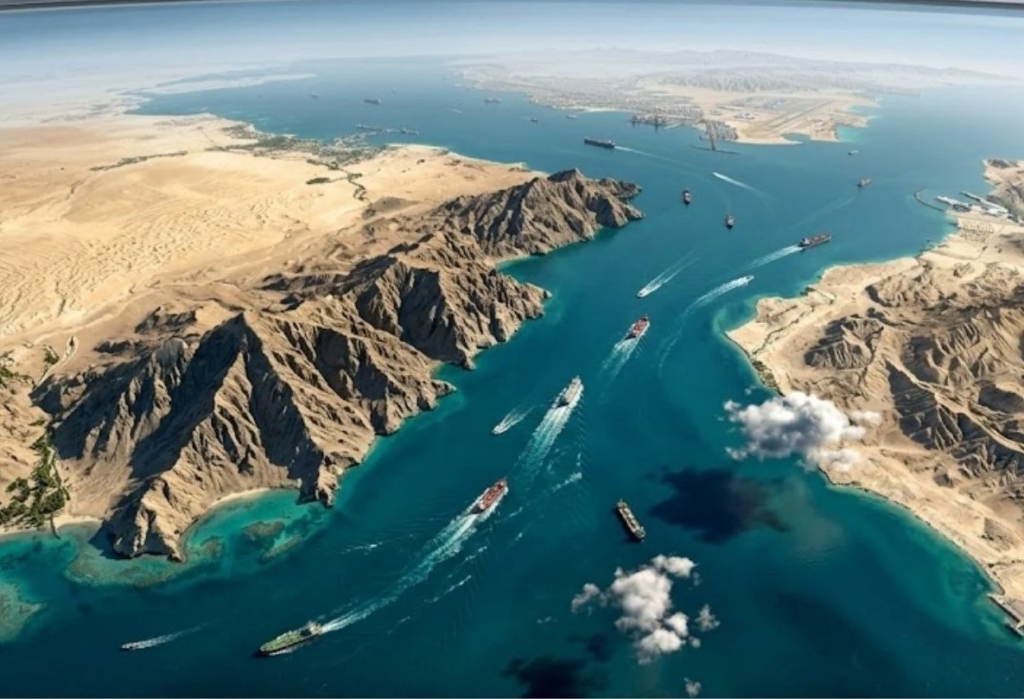
A new Iranian registration system turns the world’s busiest oil corridor into a checkpoint
Iran has introduced a mandatory registration and notification system for commercial vessels transiting the Strait of Hormuz. Under the new framework, ships must submit advance documentation to Iranian maritime authorities before entering the waterway. Non-compliance, Iranian officials have stated, will result in denial of passage.
The significance runs deeper than a bureaucratic update. Approximately 20 per cent of the world’s traded oil passes through this corridor. Any Iranian mechanism that conditions transit on administrative compliance effectively inserts Tehran into every energy supply chain that depends on Gulf exports.
How the Registration Mechanism Works
Vessels are required to file their route, cargo, and ownership details prior to entry. Iranian naval and coast guard units carry enforcement authority. Consequently, the system gives Tehran real-time visibility into commercial traffic and, by its own definition, a legal pretext to stop vessels it deems non-compliant. Notably, the framework mirrors inspection protocols that Iran has used selectively in the past, but this formalises that practice into a standing procedure.
Also Read: Trump Moves to End Iran War Without Winning Hormuz
Why Iran Moved Now
The timing connects directly to the current state of nuclear negotiations and the broader pressure campaign between Tehran and Washington. Specifically, Iran has escalated its leverage posture each time diplomatic channels have stalled. The new registration system arrives as sanctions enforcement has tightened and Iranian oil export revenues remain under sustained pressure. Therefore, this is not a maritime safety measure. It is a calibrated signal delivered through infrastructure.
The Cost Falls on Asian Importers
The countries most exposed to disruption of shipping through the Strait of Hormuz are not Western ones. India, China, Japan, and South Korea collectively import the largest volumes of Gulf crude. Consequently, any Iranian enforcement action that slows transit raises insurance premiums, extends voyage times, and forces buyers to seek alternative suppliers at higher spot prices. Meanwhile, Gulf producers, particularly Saudi Arabia and the UAE, face a situation in which their export reliability is now partly subject to Iranian administrative decisions they cannot control.
Where This Pattern Has Appeared Before
Significantly, this approach follows a model Iran has tested before and that other states have refined elsewhere. Russia used port and passage controls in the Black Sea to pressure grain shipments during the early months of the Ukraine conflict. China exerts comparable influence on the perceived navigational risk in the Taiwan Strait. Therefore, Iran’s formalised Hormuz system is part of a wider pattern in which states convert geographic chokepoints into instruments of political leverage dressed in procedural language.
The Hinge Point
The new system does not require Iran to fire a single shot. Strait of Hormuz shipping is now subject to a documentation regime that Iran administers, enforces, and interprets unilaterally. The legal fiction of free navigation remains intact on paper. The operational reality shifts the moment any vessel calculates that non-registration carries more risk than compliance. That calculation, repeated across hundreds of commercial operators, hands Tehran a durable pressure tool that operates below the threshold of open conflict. Shipping through the Strait of Hormuz has not been blocked. It has been bureaucratised into dependence on Iranian approval, and that is a more sustainable form of control.