
Trinamool’s state loss tests whether personality-led parties survive electoral reversals
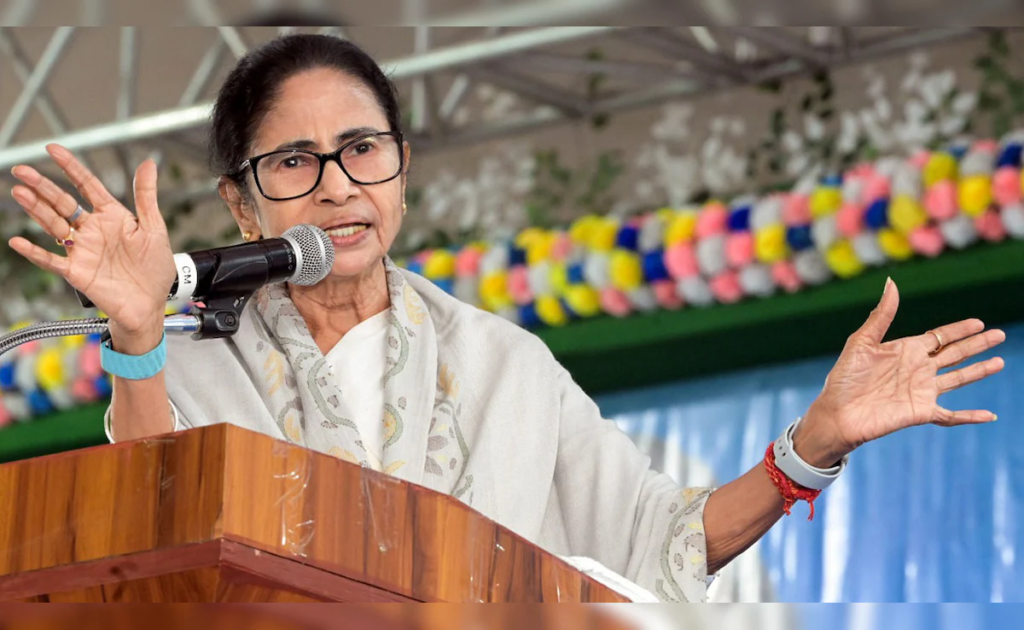
Mamata Banerjee has declined to step down as Trinamool Congress chief following a significant electoral defeat in West Bengal. The decision, announced firmly and without procedural consultation, closes off any internal reckoning within the party before it can begin.
The stakes reach beyond one state. When a dominant regional leader accepts a public verdict yet refuses accountability, it sets a precedent that reshapes how Indian opposition politics handles failure. Trinamool is not a fringe outfit. Its choices carry structural weight.
Personality Over Party Architecture
The Trinamool Congress was built around a single political identity. Consequently, its internal mechanisms for dissent, succession, or course correction were never developed with serious intent. Mamata Banerjee resignation talk, even when it surfaced briefly in party circles, was never a genuine process. It was theatre that the leadership controlled entirely. Specifically, parties constructed this way do not lose elections and then self-correct. They absorb the loss into a narrative of external conspiracy or administrative sabotage.
Also Read: Seven AAP MPs Join BJP in Rajya Sabha’s Biggest Floor Shift
The Defeat Itself and What Preceded It
The West Bengal result arrived against a backdrop of sustained anti-incumbency, a series of governance controversies, and a BJP that campaigned with unusual organisational discipline in the state. However, the scale of the defeat matters less than its character. Voters in constituencies that Trinamool had held comfortably shifted their allegiance in patterns indicating structural erosion, not a single-cycle protest vote. Notably, rural consolidation that once anchored TMC’s majority showed visible fractures.
What Opposition Consolidation Loses
The INDIA alliance and broader opposition arithmetic depend on TMC’s continued strength in Bengal. Therefore, Banerjee’s refusal to acknowledge the depth of the defeat is not merely an internal party matter. It delays the honest accounting that would allow Trinamool to rebuild before the next electoral cycle. Meanwhile, the BJP strengthens its position in a state it has pursued for over a decade. Significantly, every month without internal reform is a month the opposition cedes ground in one of India’s most electorally consequential states.
Regional Strongholds Under National Pressure
This pattern is not specific to Bengal. Across India, personality-led regional parties facing national-level headwinds have responded to defeat by consolidating around their leaders rather than pursuing structural reform. The DMK, the Samajwadi Party, and the JD(S) have all navigated versions of this tension. Consequently, the Trinamool situation is a sharper iteration of a recurring problem: regional dominance built on a single figure becomes a liability the moment that figure’s electoral invincibility is called into question.
The Hinge Point
Mamata Banerjee resignation was never the real issue. The real issue is that Trinamool lacks the institutional muscle to demand one. The party has no credible second line, no independent power centres, and no tradition of internal accountability. The defeat revealed this absence more clearly than any previous election. Banerjee’s continuation is therefore not a show of strength. It is evidence that the party has no mechanism for responding to failure except by denying its significance. West Bengal’s opposition now faces a ruling party incapable of self-correction at precisely the moment correction is required.