
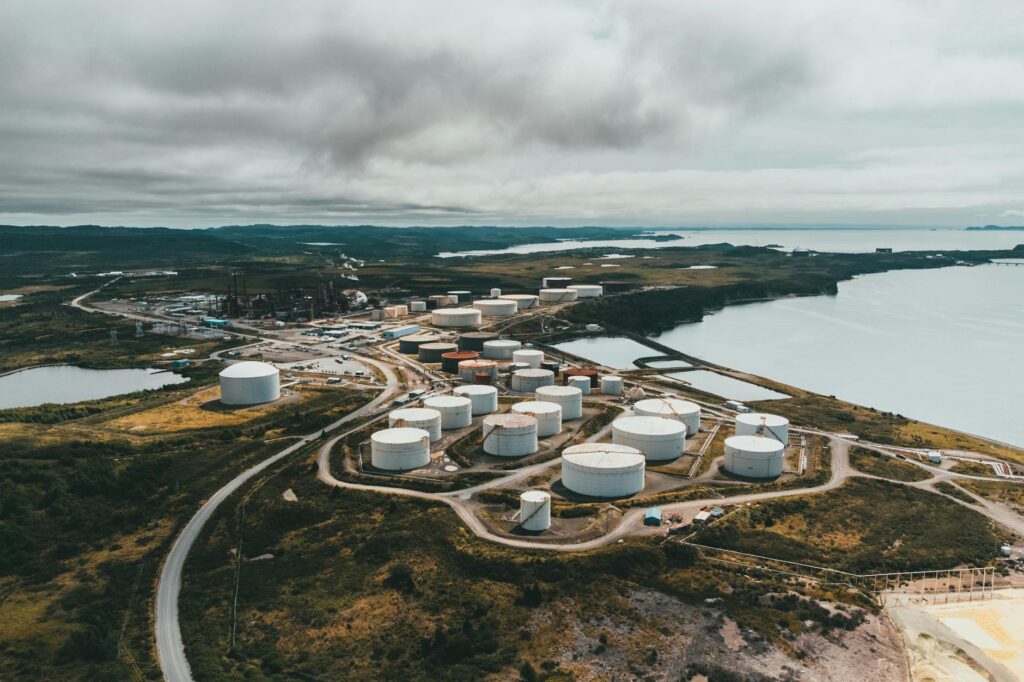
Weeks from capacity, Iran faces a forced choice that reshapes crude markets worldwide
Iran’s onshore and offshore oil reserves are approaching saturation. Sanctions-constrained exports, combined with sustained domestic production, have left the country with narrowing options and a shrinking window to act. The crisis is no longer a projection. It is a physical reality measured in tank levels and tanker queues.
The significance is systemic. When a major producer loses the ability to hold output, it does not simply pause. It either floods accessible markets at distressed prices or shuts wells, each carrying consequences that extend far beyond Iranian borders.
How Storage Saturation Forces a Producer’s Hand
Oil storage is not passive infrastructure. Tanks require maintenance, rotation, and headroom. When Iran oil storage reaches effective capacity, the operational choices collapse to two: sell at whatever price a willing buyer offers, or curtail production at the wellhead. Neither is neutral. Discounted Iranian crude entering Asian markets suppresses benchmark prices. Production curtailment risks reservoir damage that takes years to reverse.
Also Read: The Deal Is the Distraction: Inside the US-Iran Nuclear Standoff
The Sanctions Architecture That Built This Pressure
The United States reimposed and progressively tightened sanctions following the 2018 withdrawal from the nuclear accord. Consequently, Iran’s legitimate export channels narrowed to a handful of willing buyers, primarily in China and to a lesser extent India. However, even those channels operate at steep discounts and through a shadow fleet of tankers that carry their own insurance and legal risks. Significantly, recent enforcement actions against that fleet have reduced its operational capacity precisely when Iran needs it most.
Who Gains and Who Absorbs the Cost
Asian refiners stand to benefit directly. Specifically, Chinese independent refiners, known as teapots, are positioned to absorb distressed Iranian barrels at prices well below Brent benchmarks. Therefore, this situation quietly subsidises Chinese industrial output at a moment of broader economic strain. Meanwhile, Gulf producers watch their own pricing power erode as discounted Iranian crude undercuts official selling prices across the same buyer base.
The Hinge Point
The standard reading of Iran oil storage saturation focuses on supply glut and price pressure. That reading is incomplete. The fuller picture shows a producer being systematically compressed toward a binary that its adversaries designed. Full tanks force either market desperation or production damage. Both outcomes weaken Iran’s fiscal position and its negotiating leverage in any future diplomatic engagement. The United States does not need to interdict every barrel. It needs Iran oil storage to become a liability rather than an asset, and at current trajectories, that conversion is already underway. The storage crisis is not a symptom of a failed export strategy. It is the intended mechanism of economic pressure operating exactly as designed.