
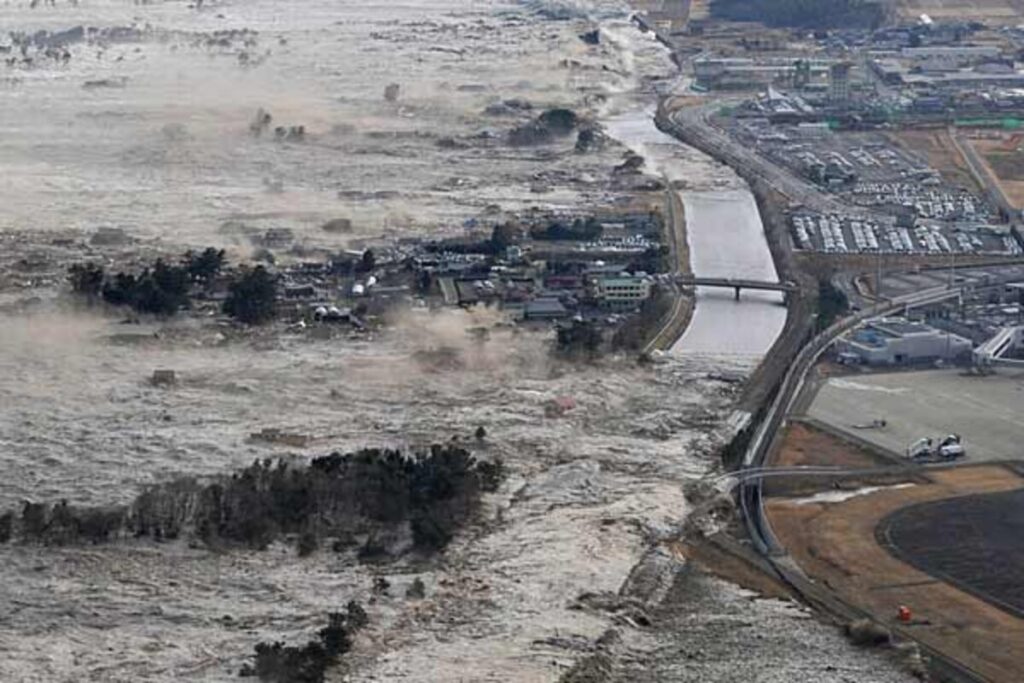
Authorities warn a larger wave may follow as evacuation orders spread across coastal zones
A significant earthquake struck off Japan’s north-east coast, prompting authorities to issue an immediate Japan tsunami warning and urge coastal residents to move to higher ground without delay. Officials stated that a second, larger wave remained a serious possibility. Evacuation orders went out across multiple prefectures within minutes of the initial tremor.
The weight of this event lies not only in the immediate danger. Japan sits atop one of the most seismically active zones on earth, and its north-east coastline carries the memory of 2011. Every major alert from this region activates the same infrastructure, the same anxieties, and the same global scrutiny.
How a Tsunami Sequence Builds
A single earthquake rarely tells the full story. Specifically, undersea quakes can trigger a series of waves, with the first often being neither the largest nor the most destructive. The gap between waves creates a false sense of safety, and that gap is precisely where casualties accumulate. Consequently, Japanese authorities have learned to warn explicitly about secondary waves rather than stand down after the first.
Also Read: BA.3.2 Hits Children Five Times Harder Than Prior Variants
Japan’s Warning System Under Pressure
Japan operates one of the most sophisticated early-warning networks in the world. However, the system’s value depends entirely on public compliance and local infrastructure readiness. Notably, coastal communities in Iwate, Miyagi, and Fukushima prefectures have invested heavily in seawalls and elevated evacuation routes since 2011. Therefore, the structural response today differs materially from what existed fourteen years ago.
The Regional and Global Stakes
A major seismic event off Japan’s north-east coast carries consequences beyond its own shores. Significantly, tsunami waves generated in this part of the Pacific travel across the ocean at speeds exceeding 800 kilometres per hour. Meanwhile, Pacific warning centres in Hawaii and the Philippines activated their monitoring protocols as a standard precaution. The event, therefore, tests not just Japan’s domestic systems but the entire Pacific-rim coordination framework.
What This Signals for Disaster Preparedness
Japan’s response to this alert reflects a deliberate policy shift made after 2011: warn louder, warn longer, and never retract an alert prematurely. Alternatively, earlier protocols prioritised avoiding public panic, a calculation that proved costly. Consequently, the current approach accepts short-term disruption as the price of long-term survival. Other seismically active nations, including Indonesia, Chile, and New Zealand, have watched Japan’s institutional evolution closely and adapted accordingly.
The Hinge Point
The tsunami warning issued today by Japan is not simply a disaster bulletin. It is evidence of how a nation systematically rewrites its own emergency doctrine through accumulated loss. The 2011 disaster revealed that architectural defences alone do not save lives; behavioural and institutional change do. Japan has since built both. The real measure of today’s event is not the wave height recorded but whether the infrastructure of collective response, the alerts, the compliance, the coordination, holds under conditions that are never identical twice. So far, the evidence from the initial hours shows that it does.